
 Save
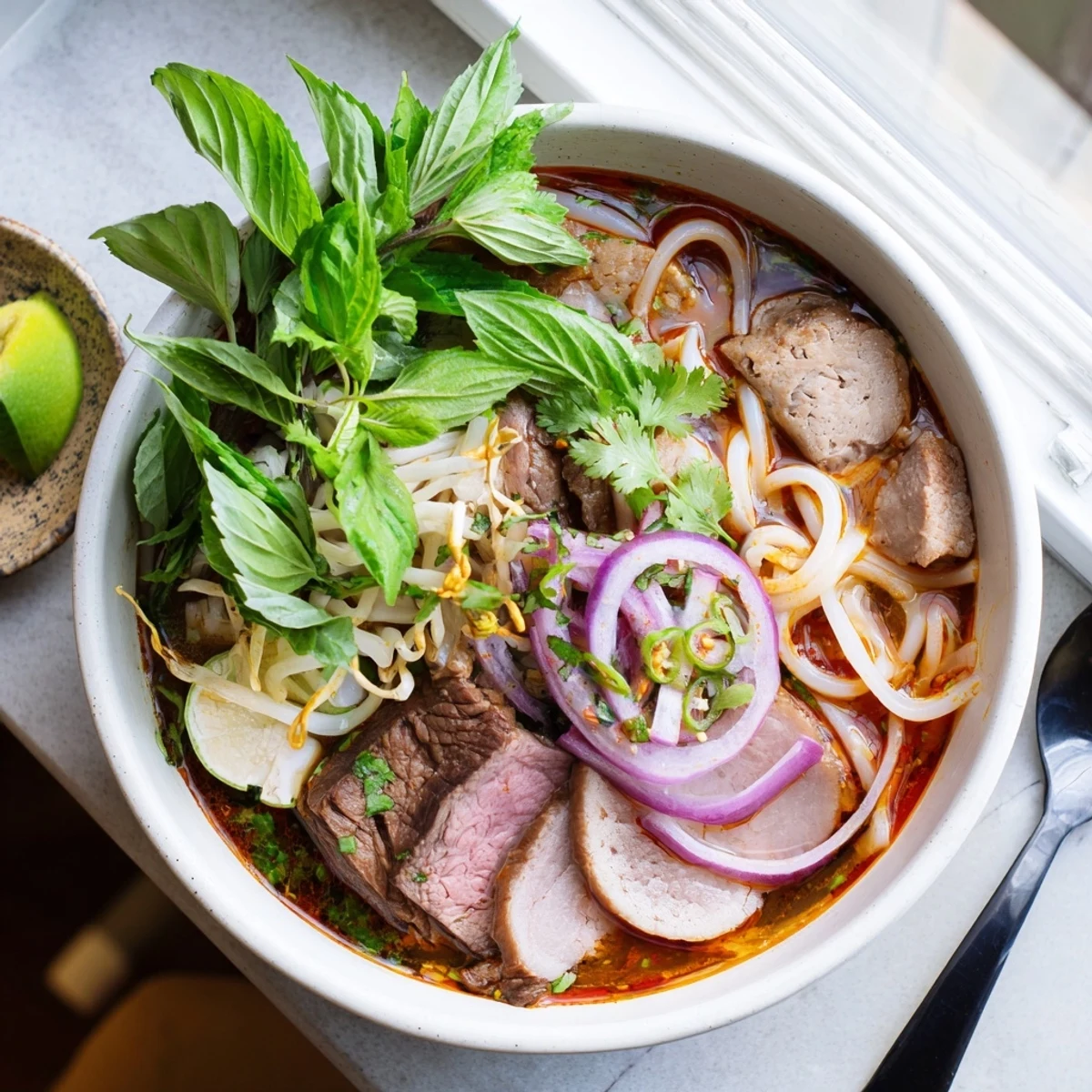
Save This beloved Central Vietnamese specialty combines a robust, hours-simmered beef and pork broth with the distinctive perfume of lemongrass, fermented shrimp paste, and aromatic chili oil. The result is a complex, deeply satisfying bowl featuring tender beef shank, fall-apart pork hock, silky rice noodles, and an array of vibrant garnishes that bring crunch, brightness, and heat. Perfect for those who appreciate the intricate balance of spicy, sour, salty, and sweet that defines Hue cuisine.
The first time I encountered Bun Bo Hue was at a tiny Vietnamese restaurant in Seattle where the waitress warned me about the heat level. I nodded enthusiastically and proceeded to sweat through three napkins while falling completely in love with the complex lemongrass kick that makes this soup legendary. Now my kitchen smells like that little restaurant whenever I make it, and my neighbors have started asking questions.
Last winter I spent a snowy Sunday making this soup while listening to Vietnamese cooking podcasts and feeling transported to a steamy street stall in Hue. My roommate walked in midway through the simmering process and declared she would happily pay restaurant prices for the aroma alone. We ate bowls while watching snow pile up outside and agreed this soup was our new cold weather tradition.
Ingredients
- Beef shank and pork hock: Bone in cuts are non negotiable here because they create that rich gelatinous body and depth of flavor that stock alone cannot provide
- Fresh lemongrass: Bruise the stalks with the back of your knife to release those aromatic oils before adding to the broth
- Shrimp paste: This fermented ingredient is the secret umami bomb but start with a small amount if you are new to its intense flavor
- Thick rice noodles: Look specifically for bun bo Hue noodles which are rounder and more substantial than pho noodles
- Annatto seeds: These give the broth its signature red orange color without adding any heat or interfering with the flavor profile
- Chili oil ingredients: Making your own aromatic oil lets you control the spice level and ensures the freshest possible flavor
- Fresh herbs and garnishes: The contrast between the hot spicy broth and cool crisp toppings is what makes each bowl exciting
Instructions
- Prep the meats for a clear broth:
- Bring the beef shank and pork hock to a boil in water then drain and rinse thoroughly to remove any impurities that would cloud your soup.
- Build the aromatic base:
- Add fresh water along with bruised lemongrass halved onion smashed garlic and sliced ginger then bring everything to a rolling boil while skimming any foam that rises to the top.
- Simmer to perfection:
- Lower the heat and add fish sauce salt both sugars and shrimp paste then let it simmer gently for about two hours until the meat is fork tender.
- Prep the proteins:
- Cook the noodles according to package instructions warm the sliced brisket and if using pork blood cubes simmer them briefly in gently boiling water.
- Create the signature chili oil:
- Heat vegetable oil with annatto seeds until they release their red color then sauté shallots and garlic before stirring in chili flakes for that final kick.
- Bring it all together:
- Layer noodles in bowls then arrange the various meats on top before ladling the hot broth over everything and finishing with that homemade chili oil.
 Save
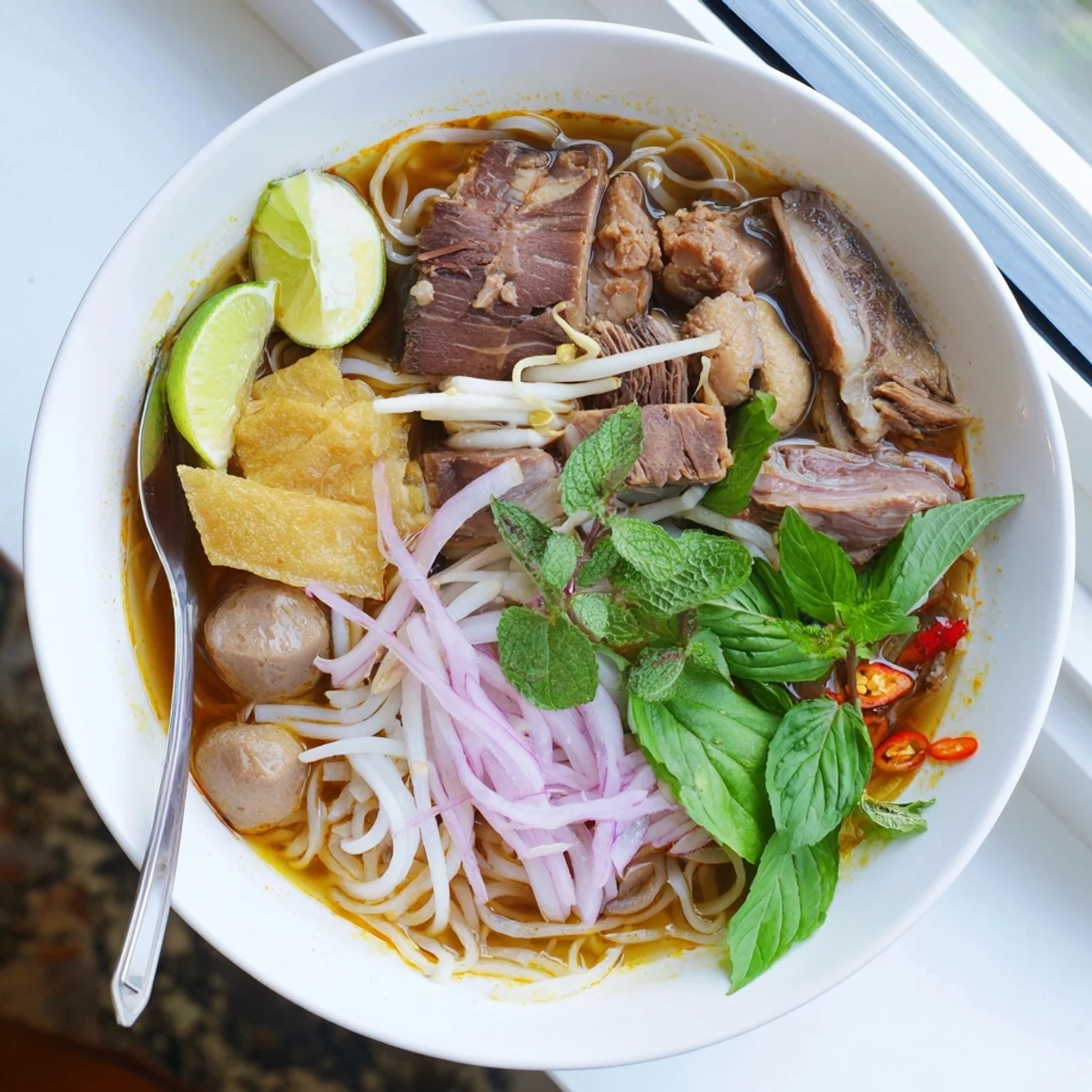
Save My Vietnamese friend told me that in Hue families gather around steaming bowls of this soup on weekend mornings lingering over breakfast for hours. Now whenever I make it I invite friends over and we do exactly the same letting the broth cool just enough between bites while catching up on life.
Getting The Broth Right
I learned that patience is the most important ingredient in the broth after trying to rush the simmering time once and ending up with watery flavor. The two hour cook time lets the collagen break down properly and all those spices meld together into something magical.
Making It Your Own
Sometimes I add a piece of pineapple or a few dried shrimp to the broth just like my friend suggested and it adds a subtle sweetness that balances the heat beautifully. Do not be afraid to adjust the spice level either because this soup should excite your palate without overwhelming it.
Serving Like A Pro
Set up a garnish station with all the fresh toppings arranged in separate bowls so everyone can customize their own bowl. The ritual of adding herbs squeezing lime and adjusting heat at the table is half the fun.
- Keep the broth at a steady simmer until serving so it stays piping hot
- Have extra lime wedges available because they brighten everything remarkably
- Offer additional chili oil on the table for the spice lovers
 Save
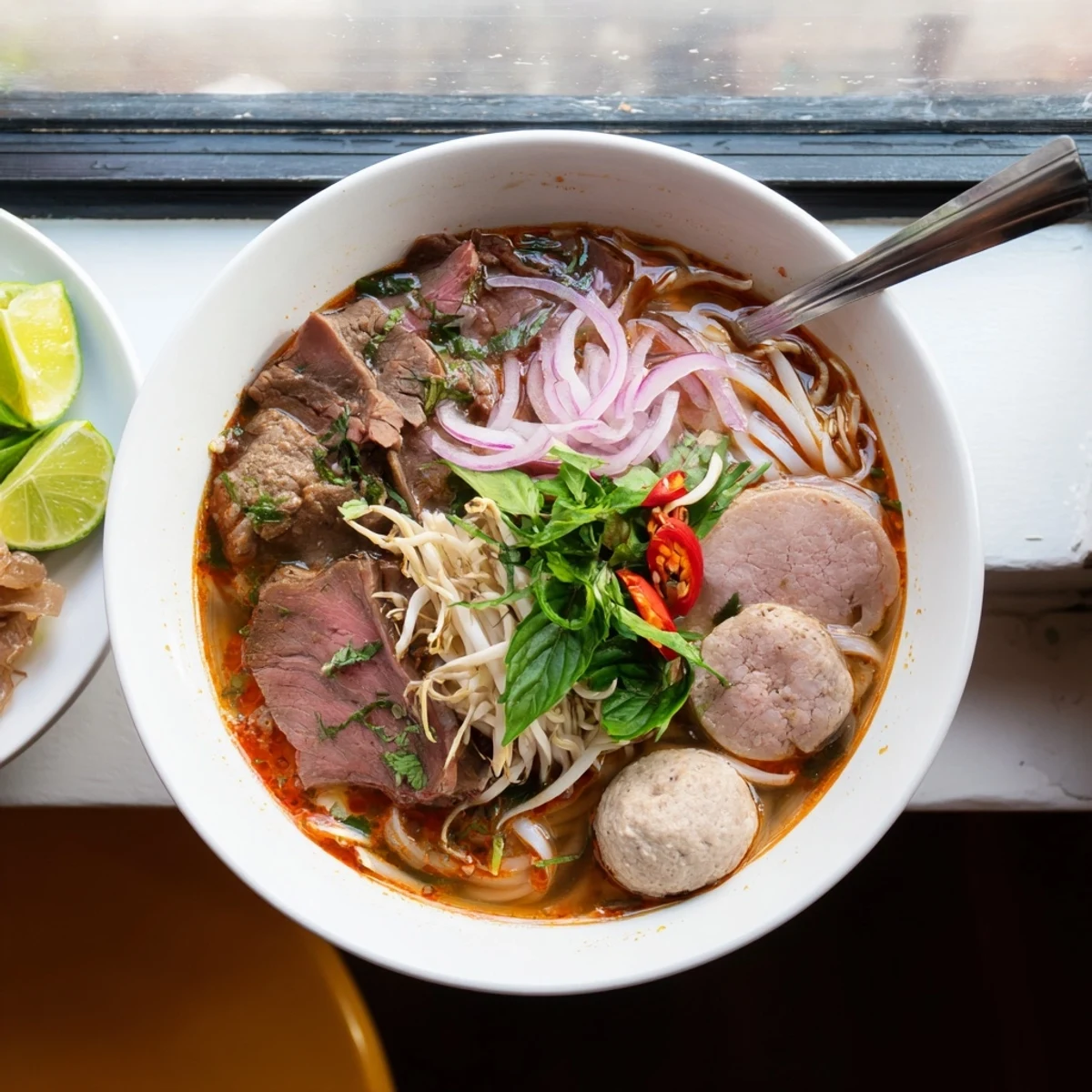
Save There is something deeply satisfying about slurping a bowl of soup that has simmered for hours and fills your entire kitchen with warmth. Hope this recipe becomes a staple in your home like it has in mine.
Recipe FAQs
- → What makes Bun Bo Hue different from pho?
-
Bun Bo Hue originates from Central Vietnam and features a spicier, more complex broth with lemongrass and shrimp paste. The noodles are thicker and rounder than pho noodles, and the dish typically includes pork hock and sometimes pork blood cubes alongside beef.
- → Is shrimp paste necessary for authentic flavor?
-
Shrimp paste (mam ruoc) provides the signature depth and umami that distinguishes this dish. While omitting it will still yield a delicious soup, you'll miss the traditional Hue character. Use sparingly as it's quite potent.
- → Can I make the broth ahead of time?
-
Absolutely. The broth actually improves after resting in the refrigerator overnight, allowing flavors to meld. Store broth and meats separately, removing any solidified fat before reheating. Slice meats just before serving.
- → Where can I find thick round rice noodles?
-
Look for bun bo Hue noodles at Asian markets specializing in Vietnamese ingredients. Some well-stocked international grocery stores carry them. If unavailable, thick udon noodles can substitute, though the texture will differ slightly.
- → How spicy is this dish traditionally?
-
Authentic Bun Bo Hue delivers noticeable heat, primarily from the aromatic chili oil and fresh bird's eye chilies served as garnishes. Adjust the amount of chili flakes and fresh chilies to your preference while maintaining the dish's characteristic warmth.
- → What's the purpose of annatto seeds?
-
Annatto seeds primarily provide the broth's characteristic reddish-orange hue. They add minimal flavor, so you can omit them without compromising taste. Paprika or a small amount of turmeric can provide similar coloration.