
 Save
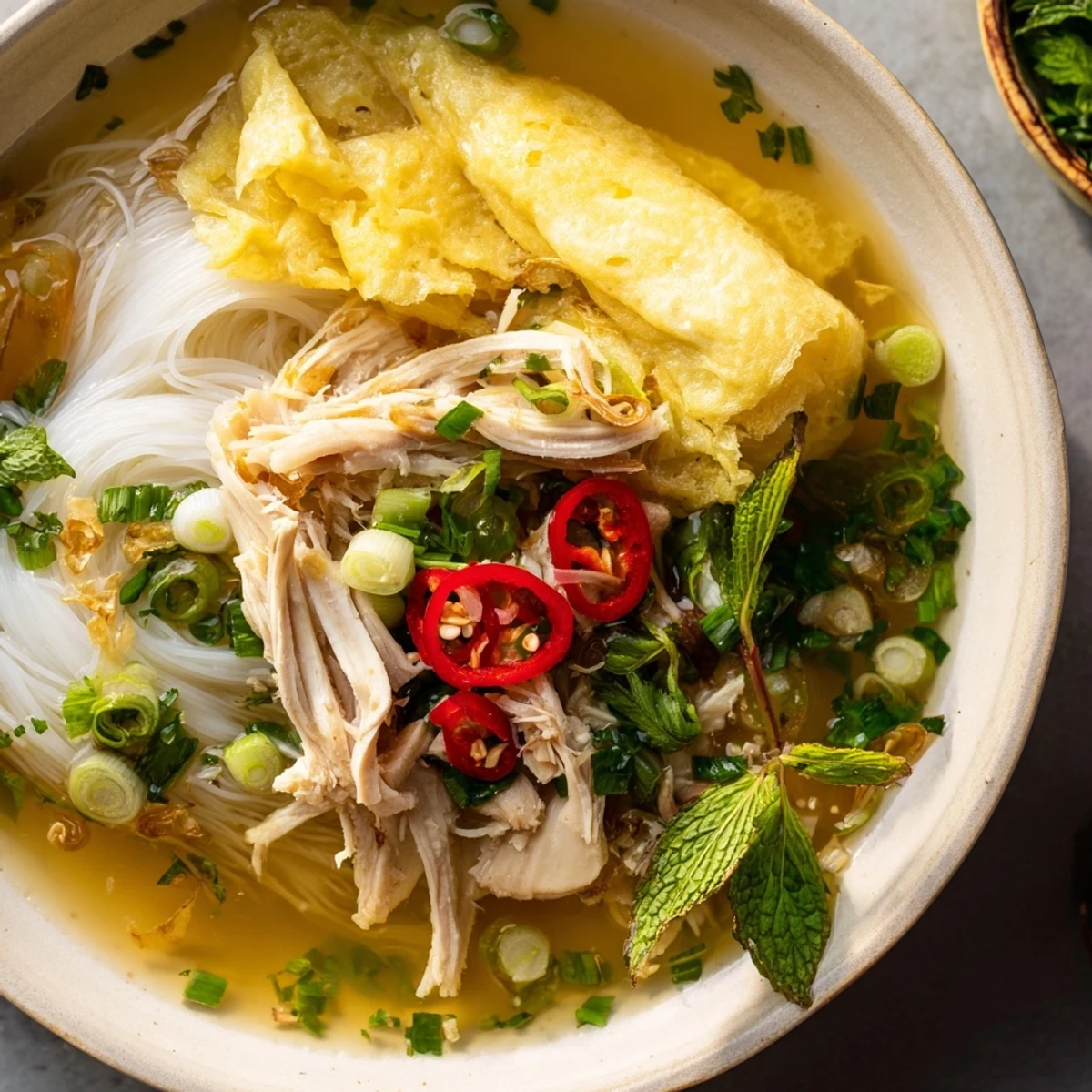
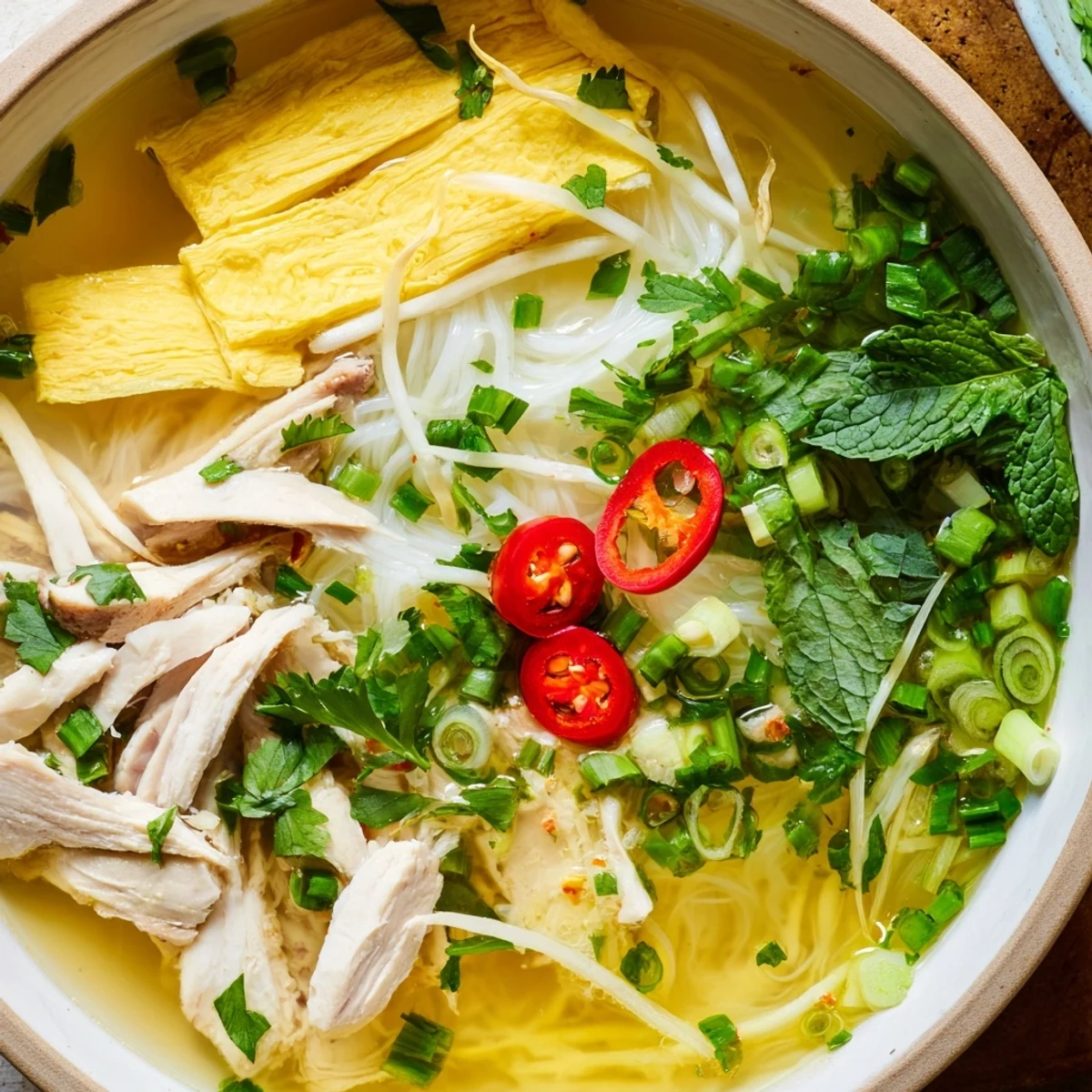
Save This beloved Hanoi specialty combines delicate flavors and textures in one satisfying bowl. Shredded chicken breast, silky egg crepe ribbons, and Vietnamese pork sausage sit atop rice vermicelli, all bathed in a crystal-clear broth simmered with onion and ginger. The dish gets its name from the many ingredients lifted into the bowl, creating layers of taste in every spoonful. Fresh herbs like cilantro, mint, and Vietnamese coriander add brightness, while optional shrimp paste brings authentic depth. Perfect for lunch or dinner, this gluten-free Vietnamese classic delivers comfort and sophistication in equal measure.
The first time I encountered Bun Thang was during a rainy afternoon in Hanoi, when a tiny street vendor pressed a steaming bowl into my hands and watched expectantly as I took my first spoonful. The broth tasted like someone had distilled pure comfort into liquid form—clear as glass but with a depth that made me pause mid-slurp. I've been chasing that perfect balance of delicate silkiness and quiet complexity ever since.
Last winter, I spent an entire Sunday afternoon making Bun Thang for my skeptical father-in-law who claimed he only liked pho. He watched me carefully julienne each component, raising his eyebrows at the precision, but after one bite of the egg crepe strips floating in that golden broth, he silently went back for seconds. Now he texts me whenever he's craving it.
Ingredients
- Whole chicken: Use a 3-pound bird with skin on for the richest broth and save the breast meat for shredding
- Yellow onion and ginger: Leave them whole and uncharred unlike pho for a subtler aromatic presence
- Rock sugar: This traditional ingredient adds a mellow sweetness that regular sugar cant quite replicate
- Large eggs: Room temperature eggs will spread more evenly when making the delicate crepe ribbons
- Vietnamese pork sausage: Look for gio lua at Asian markets—it has a bouncy texture essential to this dish
- Dried rice vermicelli: Thin bun noodles work best here as they dont overpower the delicate broth
- Vietnamese coriander: Also called rau ram this peppery herb is non-negotiable for authentic flavor
Instructions
- Simmer the broth base:
- Place the whole chicken in a large pot with peeled onion smashed ginger and water. Bring to a rolling boil then immediately reduce to a gentle simmer skimming any foam that rises to the surface for the clearest broth possible.
- Cook and remove the chicken:
- After 30 minutes carefully lift the chicken from the pot and transfer it to an ice bath to stop the cooking immediately. This keeps the breast meat tender and moist for shredding later.
- Deepen the broth:
- Let the remaining broth simmer uncovered for another 45 minutes with the onion and ginger still working their magic. Stir in salt fish sauce and rock sugar then strain through cheesecloth for absolute clarity.
- Create egg ribbons:
- Whisk eggs with a pinch of salt and pour a thin layer into a nonstick skillet over medium-low heat. Cook until just set then flip briefly—the key is barely any color. Stack the crepes and slice them into fine julienne strips.
- Prep the components:
- Shred the cooled chicken breast by hand for the most natural texture. Slice the Vietnamese sausage into thin matchsticks and soak the rice vermicelli according to package directions then rinse thoroughly with cold water.
- Build the bowls:
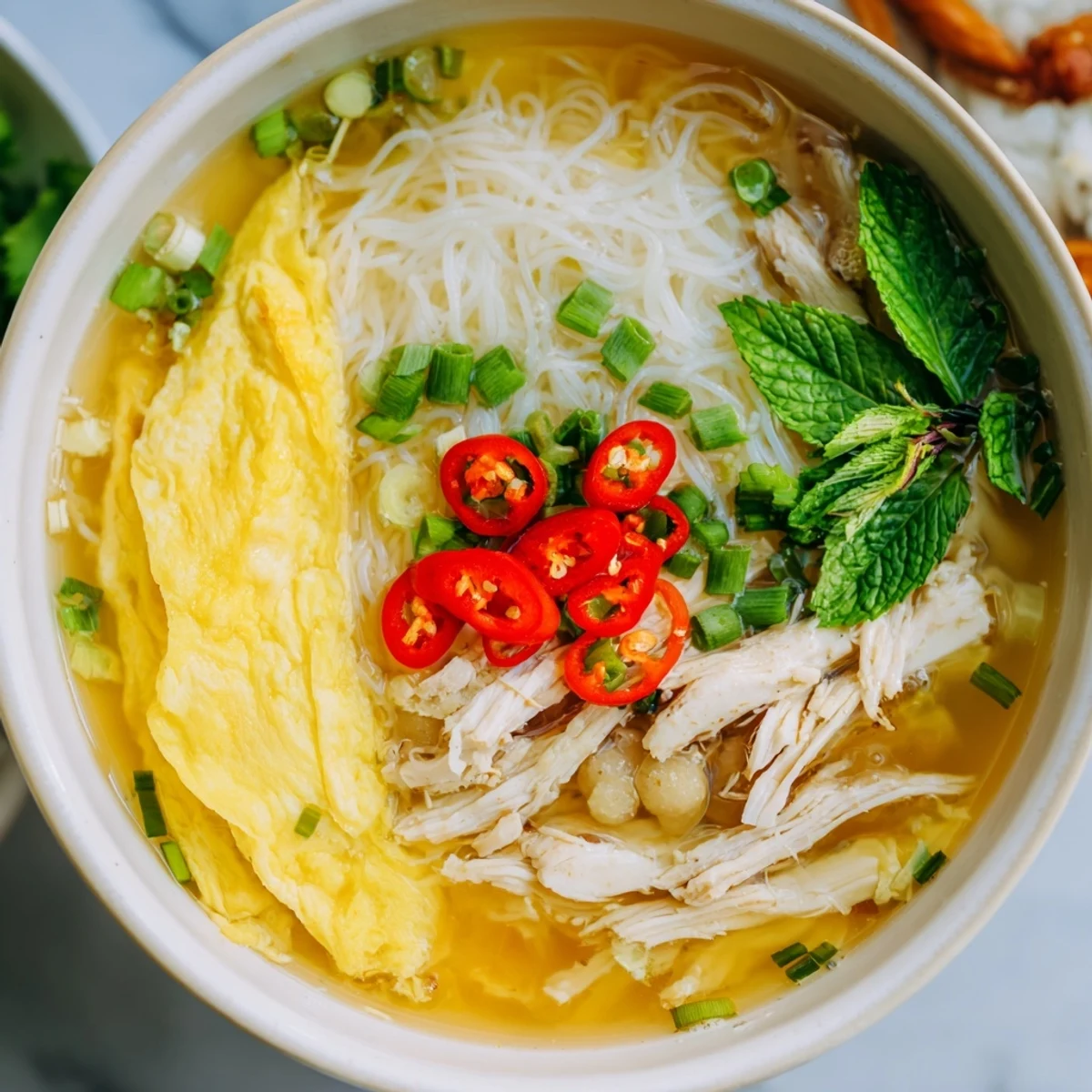
- Divide the drained noodles among four bowls and arrange the shredded chicken egg ribbons and sausage strips in separate sections on top. The visual contrast of yellow white and pink against the white noodles is part of the experience.
- Add the finishing touches:
- Scatter scallions cilantro rau ram mint and fresh chili slices over each bowl. Ladle the piping hot broth directly over the toppings which will slightly wilt the herbs and release their aromatic oils into the soup.
 Save
Save There's something meditative about arranging each component in its own section of the bowl like you're composing a tiny edible painting. My friend Lan told me that in Hanoi households the precision of your Bun Thang presentation used to be a quiet point of pride among neighbors.
Making It Your Own
The beauty of Bun Thang lies in how it uses up leftover components from other Vietnamese dishes. Many home cooks make it after celebrating Tet using remaining ham roast duck or even fried egg strips. The broth stays constant but the toppings can reflect whatever's in your refrigerator.
The Art of Clear Broth
Professional Vietnamese restaurants achieve crystal-clear broth by first blanching the chicken in boiling water then discarding that liquid before starting the real simmer. I skip this step at home but compensate by being relentless about skimming foam and using the finest mesh strainer I own.
Serving Traditions
In Hanoi this dish is traditionally served at room temperature broth alongside elaborate wedding feasts because it can be prepared ahead in its components. I love setting up a Bun Thang bar at dinner parties letting guests assemble their own bowls.
- Keep each component separate until serving to maintain texture contrast
- Offer extra lime wedges on the side—the acidity brightens the rich broth beautifully
- Always serve shrimp paste in a tiny dish on the side not directly in the soup
 Save
Save Some dishes are about bold flavors but Bun Thang is about harmony and balance. Theres something profoundly satisfying about a bowl that tastes like someone put their whole heart into making something beautiful for you.
Recipe FAQs
- → What makes the broth clear and flavorful?
-
The clarity comes from simmering the broth slowly and skimming off foam that rises to the surface. Straining the liquid after cooking removes any remaining impurities while preserving the aromatic essence from chicken, onion, and ginger.
- → Can I prepare components ahead of time?
-
Absolutely. The broth can be made 1-2 days in advance and refrigerated. Shredded chicken, egg crepes, and sliced pork sausage can be prepared the night before and stored separately in airtight containers.
- → What type of noodles work best?
-
Traditional thin rice vermicelli (bun) is ideal for this dish. Soak dried noodles in cool water for 30 minutes before boiling briefly. The thin noodles absorb the delicate broth while maintaining a pleasant chew.
- → How do I slice ingredients into thin strips?
-
Use a sharp chef's knife and slice cooled egg crepes, pork sausage, and chicken breast against the grain into julienne strips. Keep pieces uniform for elegant presentation and consistent texture in every bite.
- → Is shrimp paste necessary?
-
Shrimp paste (mam tom) is optional but traditional. It adds intense umami depth characteristic of Hanoi-style preparation. If unavailable, extra fish sauce can be substituted, though the flavor profile will differ slightly.
- → Can I make this gluten-free?
-
This dish is naturally gluten-free when using rice vermicelli and fish sauce. However, always check the pork sausage label as some brands include wheat-based fillers. Serve with lime wedges to brighten flavors.