
 Save
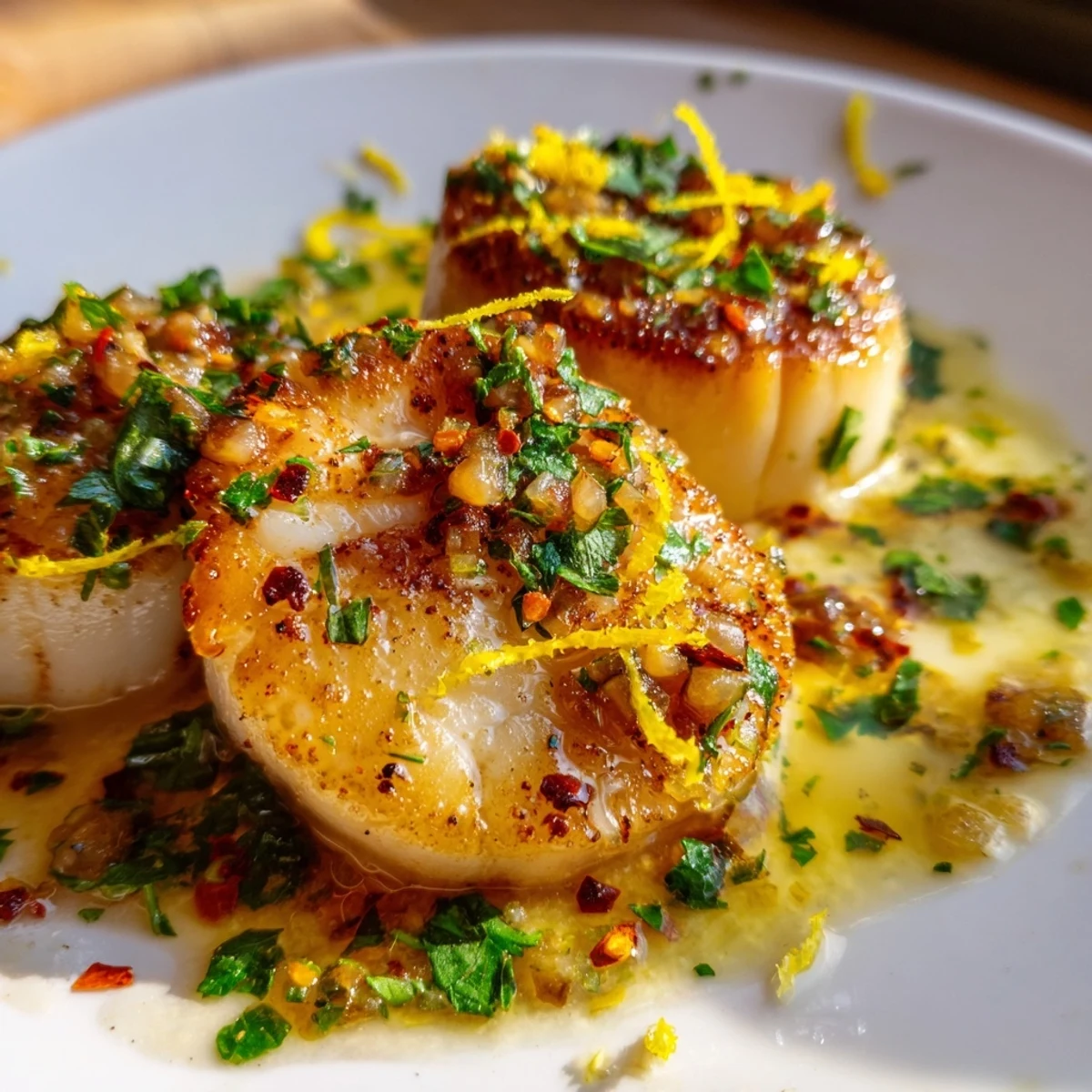
Save These scallops are perfectly seared until golden, then bathed in a fragrant garlic butter sauce. A final touch of fresh lemon zest and juice brightens the dish, while parsley adds a fresh finish. Ready in under 20 minutes, this dish balances rich, buttery flavors with zesty brightness, ideal for an elegant yet simple seafood main.
I learned to cook scallops the way you learn to cook anything worth eating—by making a complete mess of it first. My first attempt was rubber. My second was somehow worse. But then a friend invited me to her kitchen on a quiet Tuesday evening, and she moved through the motions like it was nothing: dry them, hot pan, butter foaming, two minutes of pure patience. That's when I understood that scallops aren't complicated—they're just unforgiving if you rush them.
There's a particular moment that stays with me: watching my partner's face when she tasted these for the first time, that brief quiet before she looked up and asked if I'd learned to cook while she wasn't looking. The pan sauce was still bubbling. The parsley was still bright. Sometimes a meal is just the right thing at the right time, and this was one of those nights.
Ingredients
- Sea scallops (500g): The whole dish depends on these being genuinely fresh and properly dried—wet scallops steam instead of sear, and you'll know the difference immediately.
- Unsalted butter (3 tbsp): This is where the magic lives, so use butter you'd actually eat on toast.
- Garlic cloves (3, finely minced): Mincing small matters here; larger chunks burn before the scallops finish cooking.
- Sea salt (1/2 tsp): Season generously on both sides before the pan—this is your only real seasoning besides the lemon.
- Freshly ground black pepper (1/4 tsp): Fresh pepper tastes sharper and brighter than what's been sitting in your cupboard for two years.
- Red pepper flakes (1/4 tsp, optional): A whisper of heat that won't overpower; skip it if spice and seafood don't sit right with you.
- Lemon zest (1 whole lemon): Use a microplane if you have one—it makes the zest feathery instead of chunky, and it distributes evenly through the pan sauce.
- Fresh lemon juice (1 tbsp): Fresh squeezed, no shortcuts here; the acidity is what brightens everything.
- Fresh parsley (2 tbsp, finely chopped): It's the final note of color and freshness, so save it until the very end.
Instructions
- Prepare the scallops:
- Pat them completely dry with paper towels—and I mean actually dry, not just damp. Wet scallops are the enemy of a golden crust. Season both sides with salt and pepper and let them sit while you get your pan ready.
- Heat the pan and butter:
- Use a large skillet over medium-high heat and add two tablespoons of butter. You'll know it's ready when it's foaming and smells nutty, not when it's just melted.
- Sear the scallops:
- Place them in a single layer without crowding—if you're making four servings, you might need to work in batches, and that's okay. Don't touch them for exactly two minutes. Seriously, don't peek. You're building that golden crust that makes scallops taste expensive.
- Finish the first side and flip:
- You'll see the underside has turned opaque and golden. Flip them gently, add the remaining butter and garlic to the pan, and cook for another one to two minutes, tilting the pan and spooning that foaming, garlicky butter over the tops of the scallops the whole time.
- Add brightness and move off heat:
- Remove the pan from heat completely. This matters because the residual heat is enough; you don't want to keep cooking. Add the lemon juice and zest, swirl gently, and taste the pan sauce—it should make you close your eyes a little.
- Plate and serve:
- Transfer the scallops to warm plates, spoon that pan sauce over the top, and finish with chopped parsley and an extra whisper of lemon zest if the mood strikes. Eat immediately while everything is warm and the butter is still glossy.
 Save
Save There's something about watching someone take their first bite of something you made with your own hands. It's a small vulnerability, but it's real. I've seen people's shoulders relax around this dish, watched them slow down, tasted it myself and thought about how simple goodness can be if you just give it attention.
Choosing and Storing Scallops
The difference between good scallops and great ones comes down to how they were handled before they reached your kitchen. Look for scallops that smell like the ocean, not like ammonia. If they're labeled wet scallops, they've been treated with preservatives and will release water in the pan—dry scallops are worth hunting for and worth the extra cost. Store them in the coldest part of your fridge on a bed of ice, covered loosely so air can circulate, and use them the same day if you can.
Building Flavor Layers
This dish works because each element does exactly one thing and does it well. The butter is richness and nuttiness. The garlic is depth. The lemon is brightness and acidity that cuts through everything else. The parsley is a final whisper of freshness. Nothing competes; nothing overwhelms. It's a lesson that applies to a lot of cooking: sometimes the most elegant thing is knowing when to stop adding.
Serving and Pairing
Scallops this simple deserve something on the plate that complements rather than fights them. Risotto soaks up that pan sauce like it was made for it. Crusty bread does the same thing, and honestly, sometimes that's enough. A light salad with a bright vinaigrette is the right move if you want to feel virtuous. The wine pairing matters too—a crisp Sauvignon Blanc or dry Riesling will taste like it was poured specifically for this meal.
- Serve on warmed plates so the scallops don't cool down while you're plating.
- Have everything else on the table before you start cooking; scallops wait for no one.
- Leftover pan sauce never happens, but if it does, save it for tomorrow's toast.
 Save
Save This is the kind of dish that reminds you why cooking matters—not because it's complicated, but because it's so good and so quick that it feels like a secret only a few people know. Make it once, and it becomes part of your repertoire forever.