 Save
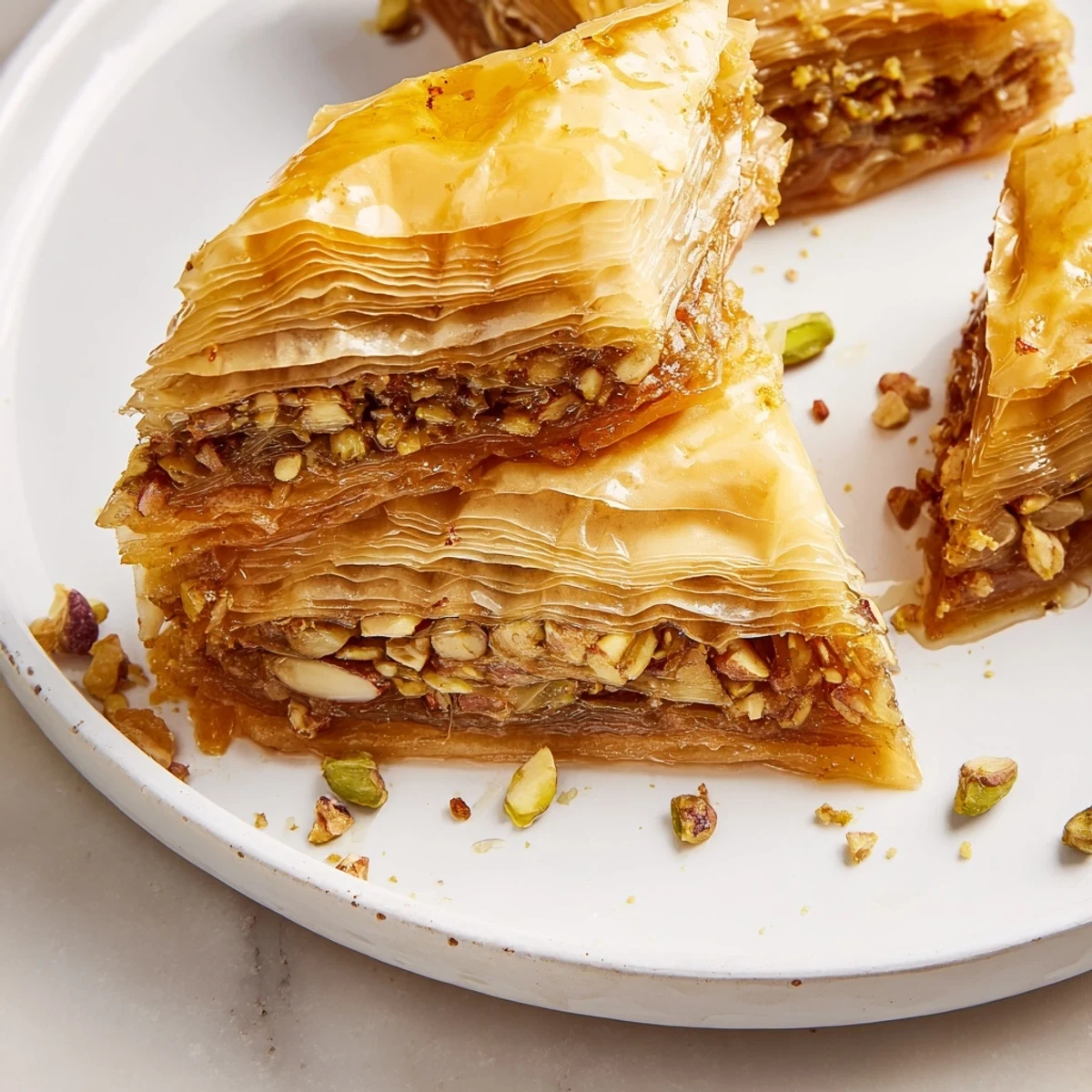
Save This traditional Greek sweet features delicate layers of buttery phyllo pastry sandwiching a fragrant mixture of walnuts, pistachios, and almonds scented with cinnamon and cloves. After baking until golden and crisp, warm honey syrup infused with cinnamon and lemon is poured over the top, soaking into every layer to create that signature sticky, sweet texture. The contrast between the crisp pastry and the syrup-soaked center makes this dessert irresistible.
The first time I attempted baklava, I was living in a tiny apartment with a kitchen so small I had to store my cutting board in the oven. My yiayia (grandmother) had given me her recipe over the phone, speaking in a mix of English and Greek that I had to write down phonetically. The phyllo dough cracked, my butter solidified halfway through, and I ended up with more syrup on my floor than in the pastry. But that first imperfect tray disappeared in twenty minutes when my friends came over, and something about the warm honey and cinnamon made the cramped space feel like home.
Last Christmas, I made three trays of this for our neighborhood gathering. A friend who had spent years living in Athens took one bite and got quiet, then told me it tasted exactly like the little bakery she visited every morning near her apartment. We stood around the kitchen island picking at the corners, discussing whether more cinnamon or fewer cloves made the better version, while snow fell outside the window. That is the kind of memory food should create.
Ingredients
- 200 g walnuts, finely chopped: The earthy foundation that balances the sweet syrup
- 100 g pistachios, finely chopped: Adds beautiful color and a slightly sweet, nutty dimension
- 50 g almonds, finely chopped: Creates depth and prevents the filling from becoming one-note
- 2 tsp ground cinnamon: The warm spice that makes baklava taste like baklava
- 1/4 tsp ground cloves: Just enough to add mystery without overwhelming
- 2 tbsp granulated sugar: Helps the nuts caramelize slightly as they bake
- 400 g phyllo dough (about 20 sheets): Keep it covered with a damp cloth while working or it will become unusable
- 200 g unsalted butter, melted: Brush every single layer, even when your wrist starts to ache
- 250 g granulated sugar: Forms the base of the syrup that transforms the pastry
- 200 ml water: Creates the right syrup consistency
- 180 g honey: Use a good quality honey for the best flavor
- 1 cinnamon stick: Infuses the syrup with gentle warmth
- 3 strips lemon peel: Cuts through the sweetness with bright citrus notes
Instructions
- Prepare your space and heat:
- Preheat the oven to 170°C (340°F) and butter a 23x33 cm baking dish. Have everything ready before you open the phyllo, because working quickly matters.
- Make the nut filling:
- Combine walnuts, pistachios, almonds, cinnamon, cloves, and sugar in a bowl. Mix until the spices are evenly distributed.
- Get the phyllo ready:
- Unroll the dough and cover it immediately with a lightly damp cloth. This is not optional, dry phyllo is the enemy.
- Build the first layer:
- Place one sheet of phyllo in the dish, brush with butter. Repeat until you have 8 buttered sheets total.
- Add first nut layer:
- Sprinkle one third of the nut mixture evenly across the phyllo. Go all the way to the edges.
- Second phyllo and nut layer:
- Add 4 more sheets, buttering each. Add another third of the nuts.
- Third phyllo and nut layer:
- Another 4 buttered phyllo sheets, then the remaining nuts.
- Finish the top:
- Layer the final 4 sheets, buttering each one. Give the top an extra generous butter coating.
- Cut before baking:
- Using a sharp knife, cut into diamonds or squares. Go all the way through, do not just score.
- Bake until golden:
- Bake for 45 to 50 minutes until deeply golden and crisp. The smell will be incredible.
- Make the syrup:
- While baklava bakes, combine sugar, water, honey, cinnamon stick, and lemon peel. Boil then simmer 10 minutes. Let cool slightly and remove the cinnamon and peel.
- The crucial step:
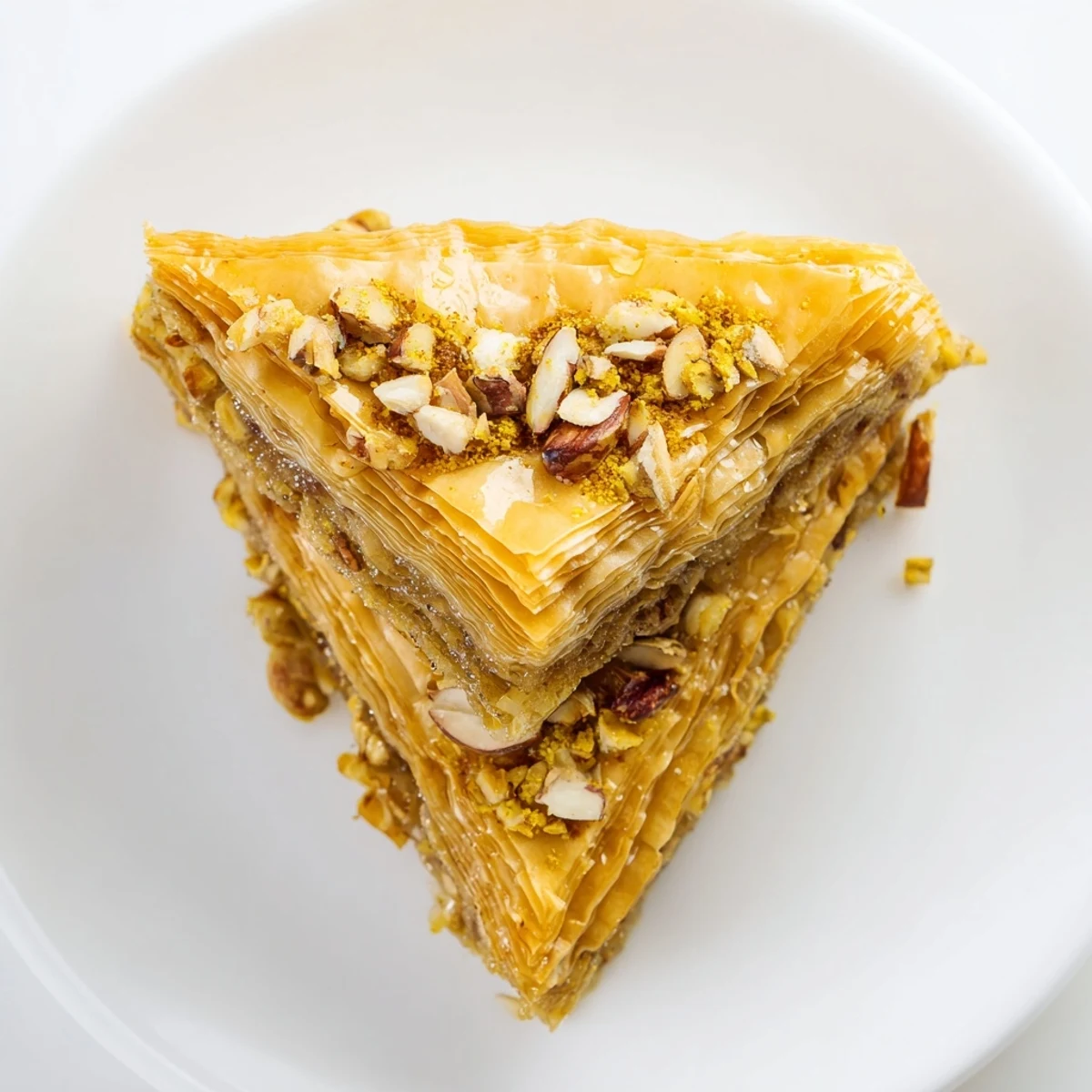
- Pour the warm syrup over the hot baklava the moment it comes out of the oven. Listen to it sizzle. Let cool completely before serving.
 Save
Save I once forgot to add the lemon peel to the syrup and missed how it brightened everything. The next time I made it, I added extra, and the balance shifted from sweet cloying to perfectly nuanced. Small adjustments matter enormously here.
Making Ahead
Baklava is one of those rare desserts that genuinely improves with time. The syrup needs hours to fully penetrate every layer, creating that characteristic texture where some bites are shatter crisp and others are tender and saturated. I always make it the day before I plan to serve it, storing it covered at room temperature.
Working With Phyllo
The biggest mistake I see is people treating phyllo like it is fragile. Yes, it tears, but small tears do not matter once you have layered everything. Work with confidence, keep it covered, and do not stress about perfection. The butter and syrup will forgive many sins.
Serving Suggestions
Traditional baklava is never alone on the table. It wants something bitter to cut through the sweetness, something strong to balance the delicate pastry. I have learned that presentation matters as much as taste.
- Serve with strong Greek coffee or mint tea
- A small scoop of unsweetened whipped cream or Greek yogurt helps
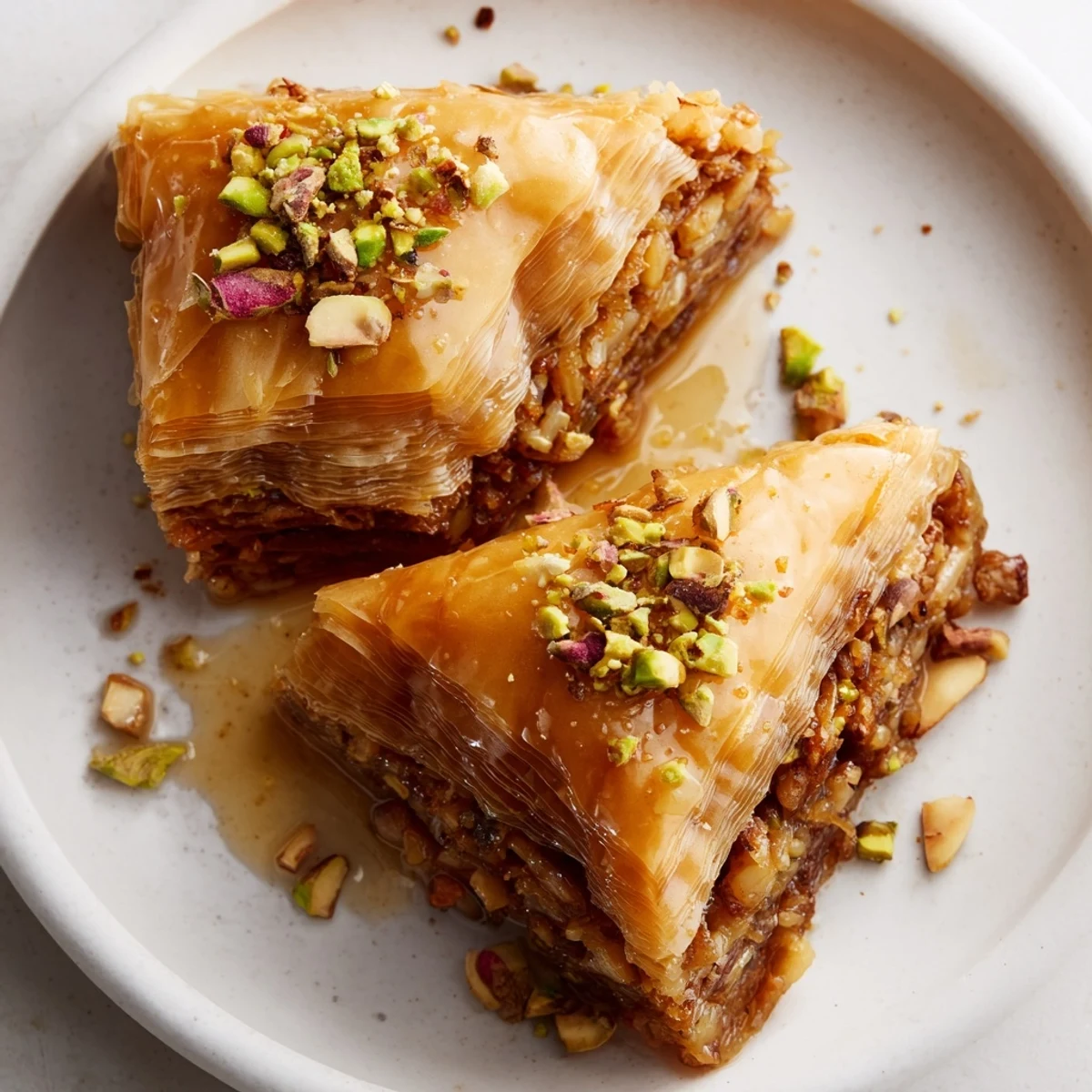
- Plat it on a decorative plate, maybe with a single perfect pistachio on top
 Save
Save There is something deeply satisfying about cutting into that first diamond and hearing the crisp snap. Make it for people you love, and enjoy how something so simple can create such lasting memories.
Recipe FAQs
- → How long should baklava cool before serving?
-
Allow baklava to cool completely at room temperature for at least 2-3 hours after adding the syrup. This gives the honey time to soak through all layers properly. For the best texture and flavor, let it rest overnight—the flavors develop and the pastry becomes perfectly tender yet crisp.
- → Can I make baklava ahead of time?
-
Yes, baklava actually improves with time. You can prepare it up to 2 days in advance. Store covered at room temperature—the syrup continues to soften the pastry beautifully. Avoid refrigerating as this makes the phyllo soggy. Bring to room temperature before serving for the best texture.
- → What's the secret to keeping phyllo from drying out?
-
Work quickly and keep unused phyllo covered with a lightly damp clean kitchen towel or plastic wrap. Don't let the sheets sit exposed for more than a few minutes. If phyllo becomes dry and brittle, it will crack instead of folding neatly. Thaw frozen phyllo overnight in the refrigerator before using.
- → Can I substitute the nuts in the filling?
-
While walnuts and pistachios are traditional, you can use other nuts like hazelnuts, pecans, or cashews. A mix of hazelnuts and almonds works wonderfully. Keep the total nut quantity the same and chop them finely for even distribution. Each nut blend will create slightly different flavor profiles.
- → Should the syrup be hot or cold when pouring over baklava?
-
Pour warm (not boiling) syrup over hot baklava straight from the oven. This temperature difference helps the syrup absorb evenly and creates the right texture. If syrup is too hot, it may make the pastry soggy; if too cold, it won't penetrate properly. Let the syrup cool for about 10-15 minutes after simmering.