
 Save
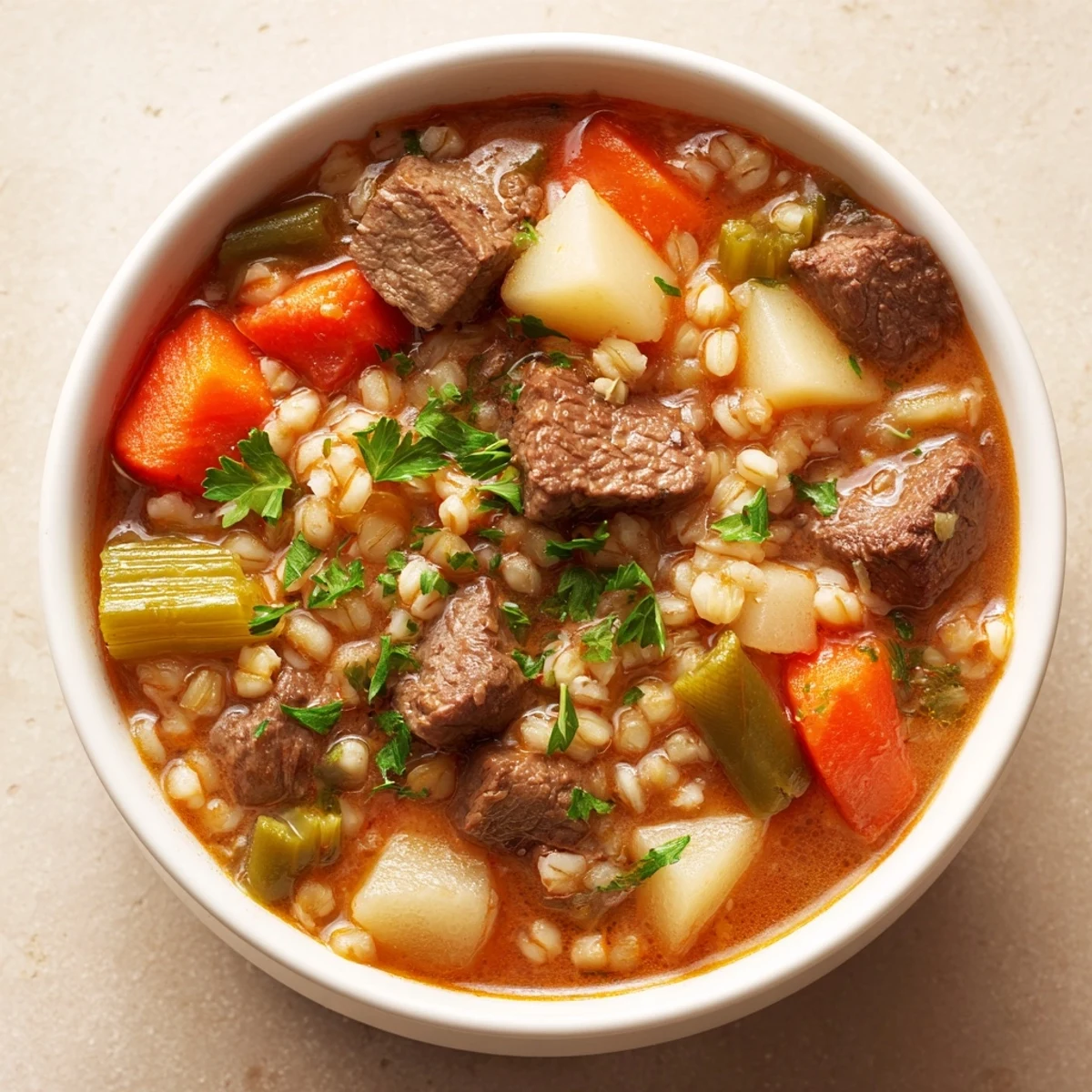
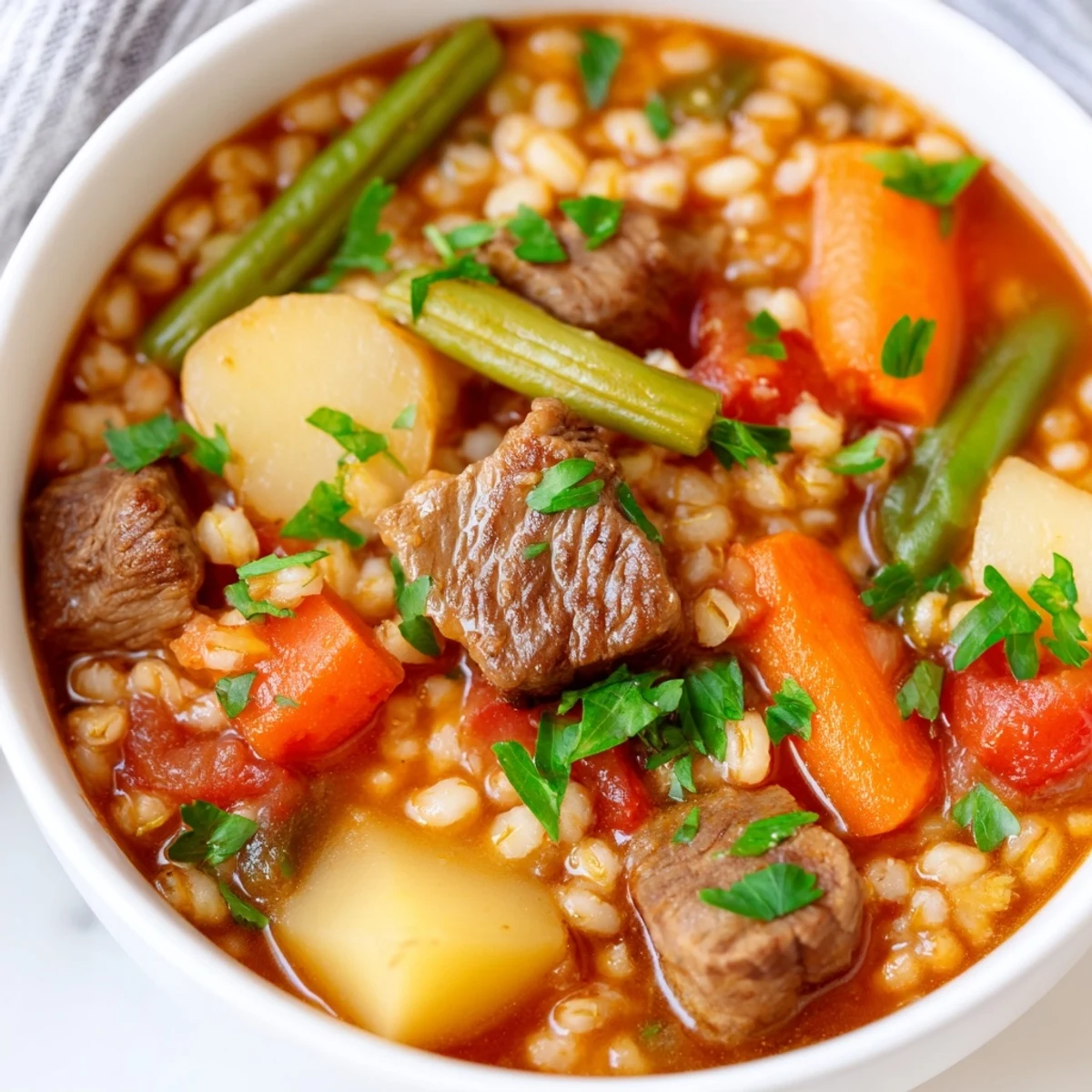
Save This hearty stew combines tender cubes of beef with wholesome pearl barley and a variety of fresh vegetables like carrots, celery, and green beans. Simmered slowly in a flavorful broth seasoned with thyme, rosemary, and tomato paste, it delivers a rich and satisfying dish ideal for colder days. The addition of diced tomatoes and potatoes enhances its body and texture, making it a well-rounded option for a filling main course. Garnished with fresh parsley, this dish offers warmth and comfort in every bite.
There's something about a pot of beef and barley stew that stops time on a cold afternoon. I discovered this version on a November day when the farmers market had mountains of root vegetables piled up, and I wanted to make something that would fill the kitchen with warmth for hours. The barley adds this unexpected chewiness that keeps things interesting, and the broth turns deep and rich without any fussing.
I made this for my sister during a surprise visit, and she sat at the counter watching steam rise from the pot while we talked about old things. By the time it was ready, the whole house smelled like herbs and slow-cooked beef, and somehow that smell made the evening feel less rushed. She's asked for it twice since then.
Ingredients
- Beef chuck, 1.5 lbs cut into 1-inch cubes: Chuck has the right amount of marbling to become tender and give the broth real body without drying out, even after two hours of cooking.
- Olive oil, 1 tbsp: Just enough to get the pan hot enough for a proper sear on the beef without making the stew greasy.
- Carrots, 2 medium peeled and sliced: They soften completely and add a natural sweetness that balances the savory broth.
- Celery stalks, 2 diced: This is the quiet backbone of the stew, adding depth that you taste but don't notice as a separate flavor.
- Onion, 1 large chopped: Gets soft and practically dissolves into the broth, building that foundation layer of flavor.
- Garlic, 2 cloves minced: Added late so it stays bright and doesn't turn bitter from the long cooking time.
- Potato, 1 large peeled and diced: Adds body without thickening, and stays tender throughout without falling apart.
- Green beans, 1 cup cut into 1-inch pieces: These stay a little bit firm and add color, going in near the end so they don't dissolve completely.
- Diced tomatoes with juices, 1 can (14 oz): The acidity keeps everything tasting bright and prevents the stew from feeling too heavy.
- Pearl barley, 2/3 cup rinsed: Rinsing removes the starch so it won't make the broth cloudy, and it absorbs flavor while keeping its chew.
- Beef broth, 6 cups: The foundation, and worth tasting before you add salt since some broths are already seasoned heavily.
- Water, 1 cup: Dilutes the broth just enough so nothing tastes overwhelming or one-dimensional.
- Tomato paste, 2 tbsp: Concentrate of tomato flavor and natural thickener that creates body without flour or cream.
- Bay leaf, 1: Adds a subtle herbal note that shifts as it cooks, then comes right out before serving.
- Dried thyme, 1 tsp: Earthy and warming, the real backbone of the herb flavor in this stew.
- Dried rosemary, 1 tsp: Pine-forward and slightly resinous, it echoes the earthiness of the barley.
- Black pepper, 1/2 tsp: Added at the beginning so it mellows into the background rather than staying sharp.
- Salt, 1 tsp or to taste: Start conservative since broth varies wildly in salt content, and you can always add more.
- Fresh parsley, 2 tbsp chopped for garnish: A bright finish that wakes everything up right before you eat it.
Instructions
- Heat and sear the beef:
- Get the oil smoking hot in your pot over medium-high heat, then add the beef in a single layer without crowding. You'll hear it sizzle immediately—that's the sound of a proper sear. Work in batches and let each piece sit undisturbed for a minute or two so it browns instead of steaming.
- Build the base:
- Pour out the beef into a dish, then add onion, carrots, and celery directly to the hot pot. The vegetables should hit that residual heat and start to soften after about five minutes, scraping up all those browned bits stuck to the bottom. Stir in the garlic, let it bloom for just a minute, and breathe in that smell.
- Bring it all together:
- Return the beef to the pot along with the tomatoes, tomato paste, broth, water, bay leaf, thyme, rosemary, salt, and pepper. Stir so everything is submerged and the paste breaks up into the liquid. Bring it to a boil—you'll see big rolling bubbles breaking the surface—then lower the heat and cover.
- First long simmer:
- Let it bubble gently for an hour, with just occasional steam escaping. The beef is getting tender and the flavors are marrying into something deeper. You can leave this alone, or stir it once or twice if you like checking on things.
- Add the remaining vegetables and barley:
- Stir in the barley, potatoes, and green beans after that first hour. Make sure everything is submerged again, cover, and let it keep simmering for another 45 to 60 minutes. The barley will absorb broth and become chewy-tender, the potatoes will be soft all the way through, and the beef will be so tender it practically melts.
- Final taste and serve:
- Fish out the bay leaf, then taste a spoonful and adjust the salt and pepper to your preference. Ladle it into bowls, scatter fresh parsley over the top, and serve while it's still steaming.
 Save
Save The first time someone asked for seconds and then asked for the recipe, I realized this wasn't just a dinner anymore—it was something I'd made that mattered enough to want to recreate. That's the moment cooking stops being about following instructions and becomes about making something people actually want to eat again.
Why Barley Changes Everything
Barley is the secret that most people skip over, reaching instead for rice or noodles. But barley has this nutty, almost grain-forward flavor that absorbs the broth instead of getting waterlogged, and it adds texture that keeps every spoonful interesting. It's the reason this stew doesn't feel one-note, and why people keep coming back for more.
Making It Your Own
The beauty of a stew like this is that it bends to whatever's in your kitchen or mood. I've added half a cup of red wine in place of some of the water for richness, and I've also made it with lamb instead of beef on nights when I wanted something slightly different. The foundation is strong enough to handle small changes without falling apart.
- A splash of red wine adds richness and depth if you have a bottle open.
- Fresh herbs like basil or oregano can replace part of the dried thyme if that's what you prefer.
- A vegetarian version works beautifully with hearty mushrooms (cremini or portobello) and vegetable broth instead of beef.
Serving and Storage
Crusty bread is the only thing this stew truly needs beside a bowl and a spoon. The next day, it's even better—the flavors deepen and the barley softens a little more. It keeps in the fridge for four days and freezes beautifully for up to three months, so making a double batch means you have dinner ready on nights when you can't face cooking.
 Save
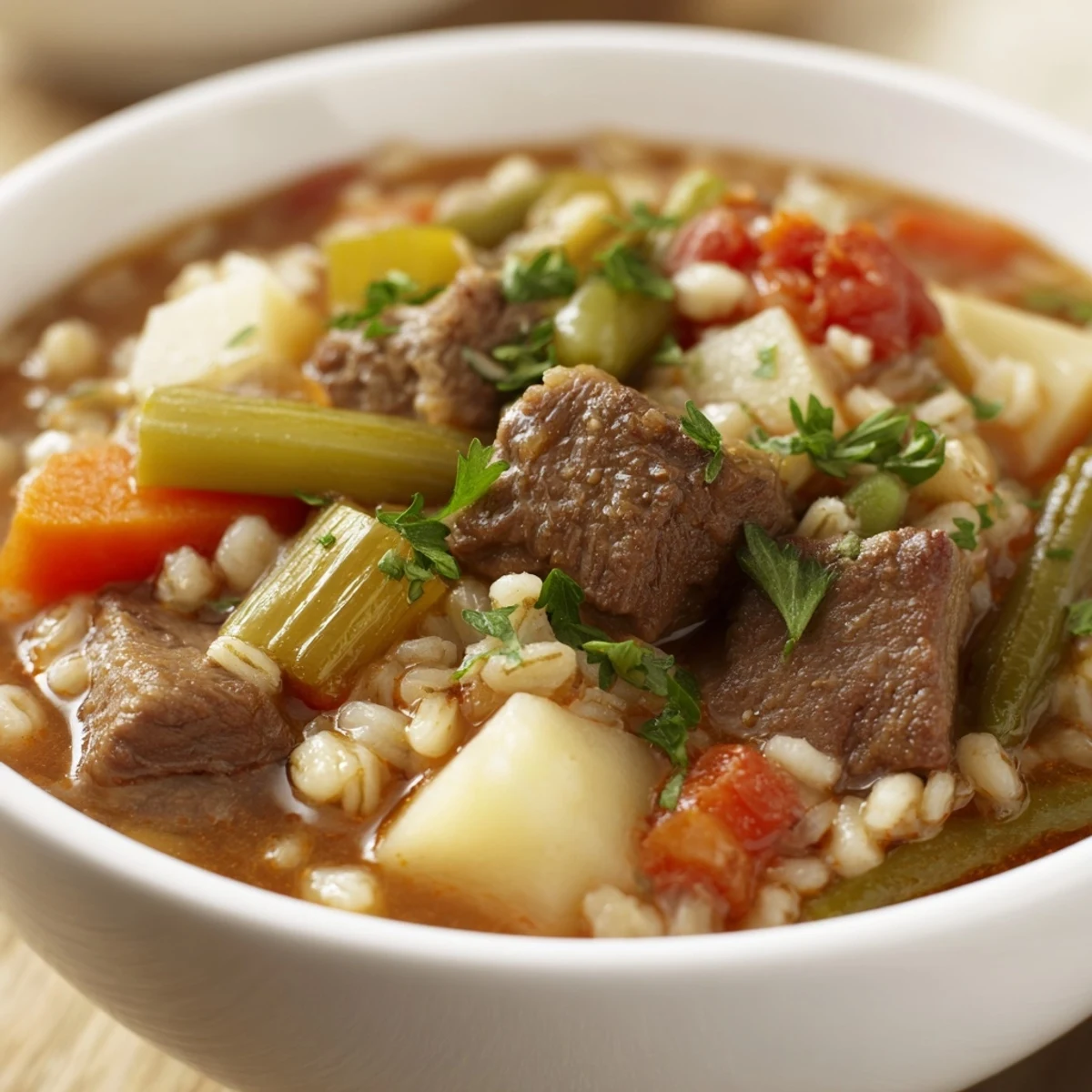
Save This stew is the kind of food that turns an ordinary evening into something warm and memorable. Make it for people you care about, or make it for yourself on a day when you need something good.
Recipe FAQs
- → What cut of beef is best for this stew?
-
Beef chuck is ideal as it becomes tender and flavorful after slow simmering.
- → Can I use a different grain instead of pearl barley?
-
Yes, you can substitute pearl barley with farro or brown rice for a similar texture.
- → How long should the stew simmer for optimal tenderness?
-
Simmer the stew for about 2 hours to allow the beef to become tender and the flavors to meld.
- → What vegetables complement this stew well?
-
Carrots, celery, green beans, potatoes, and tomatoes provide a balanced and hearty vegetable mix.
- → Is there a way to intensify the flavor of the stew?
-
Adding a splash of red wine during cooking can deepen the flavor profile and add richness.
- → Can this dish be adapted for vegetarian diets?
-
Yes, replace beef with mushrooms and use vegetable broth instead of beef broth for a vegetarian version.