
 Save
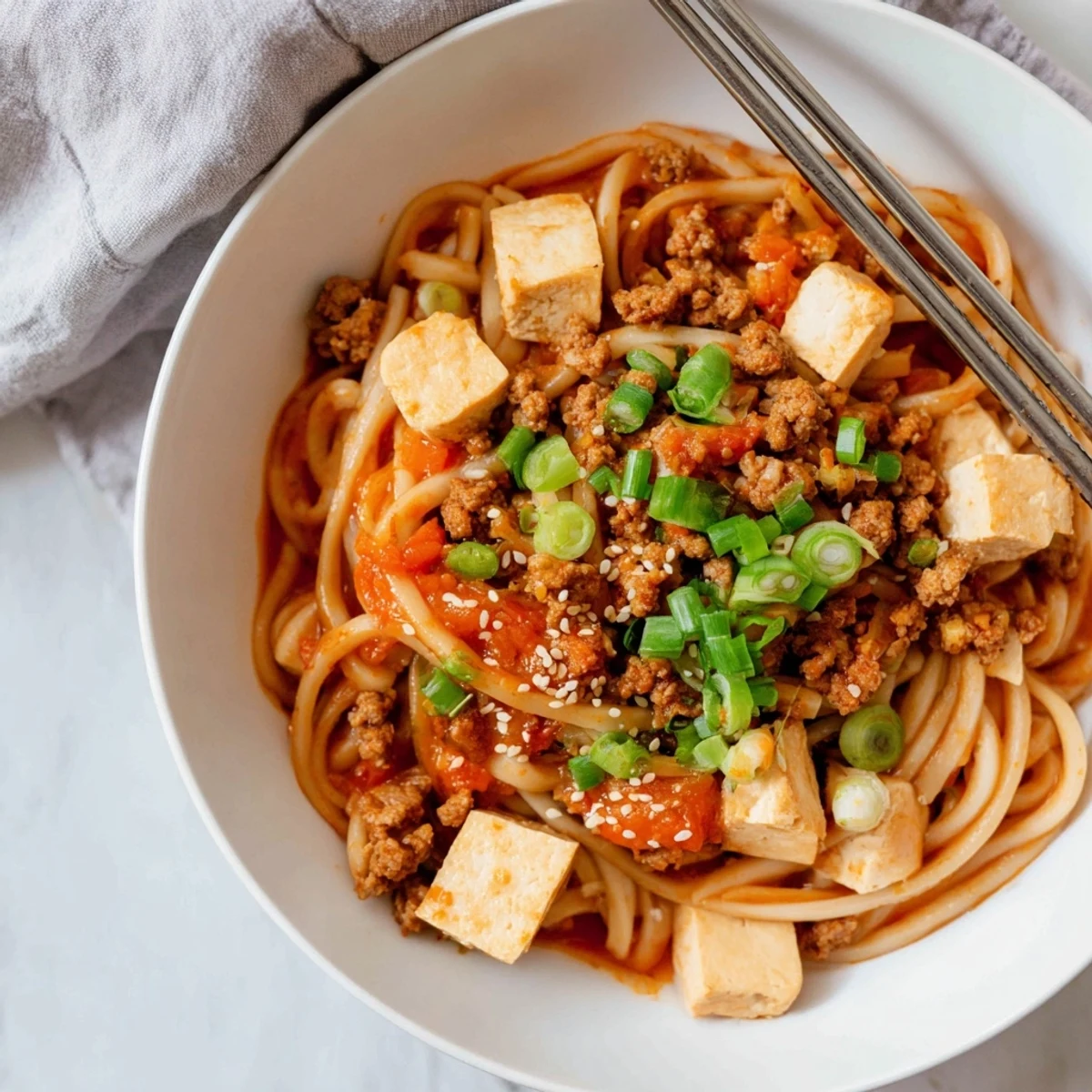
Save This fusion dish brings together the best of Chinese and Japanese cuisines. Soft tofu cubes simmer in a rich, spicy sauce made with doubanjiang fermented chili paste, aromatic garlic and ginger, and savory seasonings. The sauce gets its signature numbing heat from toasted Sichuan peppercorns and its depth from soy sauce, oyster sauce, and Shaoxing wine.
Served over thick, chewy udon noodles, each bowl offers a satisfying contrast of textures. The silky tofu, tender ground pork, and spring onions cling to the noodles, while the thickened sauce coats every strand. Ready in just 35 minutes, this comforting bowl delivers restaurant-quality flavors with simple techniques.
The first time I saw mapo tofu clinging to thick udon noodles, I stopped in my tracks. Someone had taken that numbing, fiery Sichuan sauce I loved and let it coat every inch of chewy Japanese noodles instead of rice. I went home that night and recreated it, burning my tongue twice because I couldn't wait for it to cool down properly. Now it's the dish I make when I want something that feels like a warm hug but still packs a serious punch.
My roommate walked in while I was toasting the Sichuan peppercorns and asked what smelled like citrus and fire all at once. She ended up sitting at the counter while I cooked, and we devoured the whole batch standing up with nothing but forks and a shared bowl between us. That's when I knew this wasn't just dinner, it was a conversation starter.
Ingredients
- Soft tofu: The silky texture soaks up that spicy sauce beautifully, just don't stir too vigorously or it'll break apart
- Ground pork or plant-based mince: This adds body and savory depth to the sauce, coating each strand of udon
- Fresh udon noodles: Their chewy thickness stands up to the bold flavors, unlike thinner noodles that get lost
- Sichuan peppercorns: Lightly crush these right before using to release their signature numbing citrusy aroma
- Doubanjiang: This fermented chili bean paste is the soul of the dish, its funky heat builds layers of flavor
- Cornstarch slurry: Essential for getting that restaurant style glossy sauce that clings to every noodle
Instructions
- Get your mise en place ready:
- Cube the tofu carefully, mince your aromatics, and start that water boiling now because everything moves fast once the heat is on
- Toast the peppercorns:
- Heat your wok until you can feel the warmth rising, then toast the crushed peppercorns in hot oil until the room fills with their unique fragrance, about 30 seconds
- Build your flavor base:
- Add garlic, ginger, and the white parts of your spring onions, stirring constantly until they're aromatic but not browned
- Brown your protein:
- Crank up the heat and break apart the pork (or plant-based mince) until it's nicely browned and crispy in spots
- Add the doubanjiang:
- Stir in the fermented bean paste and let it cook until the oil turns red and smells intoxicatingly spicy
- Create the sauce:
- Pour in soy sauce, oyster sauce, Shaoxing wine, and sugar, letting everything bubble together into a glossy mixture
- Simmer the tofu:
- Gently slide in those tender tofu cubes with broth, letting them simmer while you occasionally spoon sauce over the top
- Thicken to perfection:
- Stir in your cornstarch slurry and watch the sauce transform into something glossy and thick enough to coat a spoon
- Cook the noodles:
- Drop your udon into boiling water and cook just until tender, fresh ones only need a couple of minutes
- Bring it together:
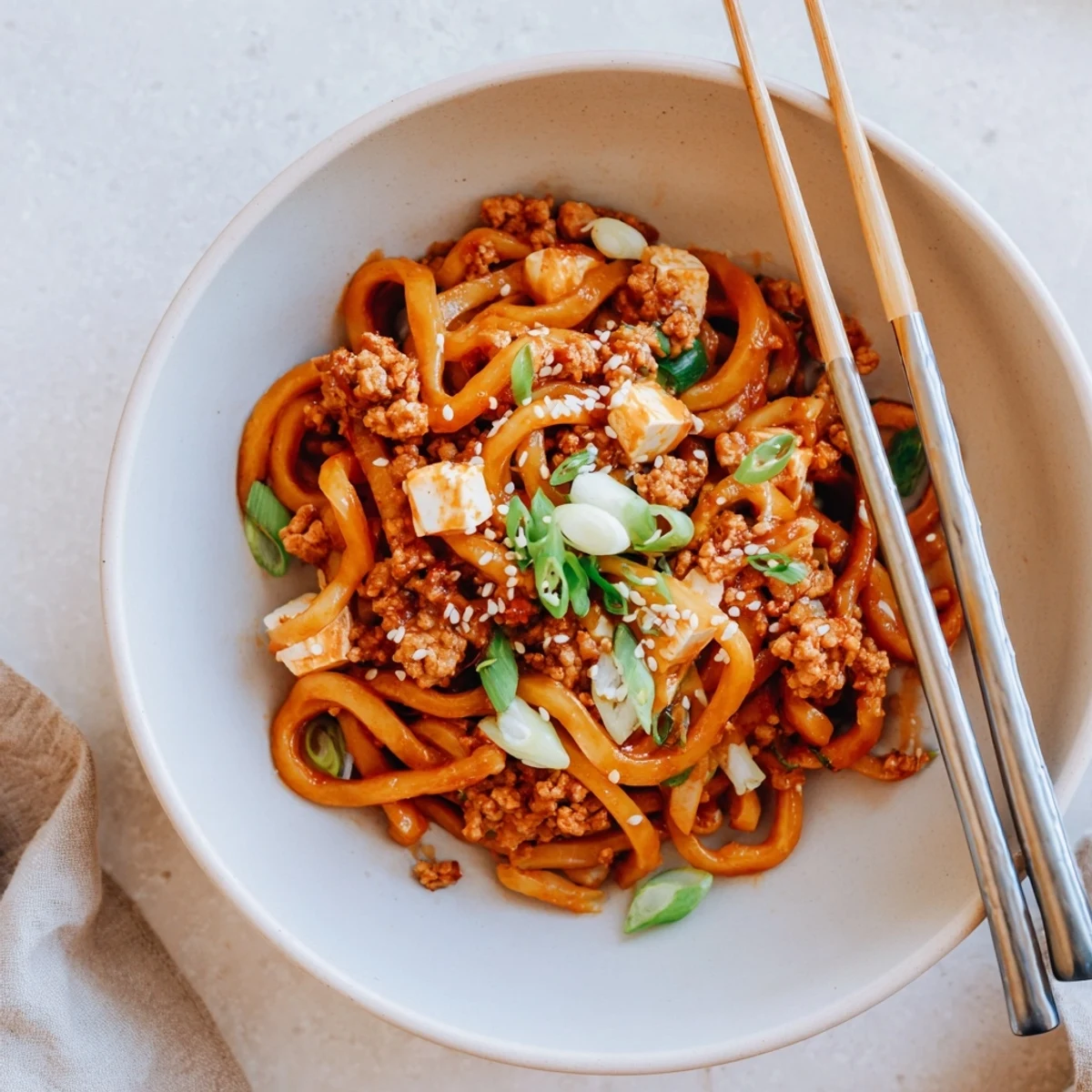
- Pile those steaming noodles into bowls and ladle generous amounts of mapo tofu over the top, letting the sauce seep down through the strands
 Save
Save Last winter during a snowstorm, I made a triple batch and neighbors kept knocking on my door following the smell. We ended up eating around my coffee table with everyone bundled in coats, steam rising from our bowls as snow piled up outside. Those noodles comforted us in a way takeout never could.
Getting The Sauce Just Right
The sauce should be thick enough to coat the back of a spoon but still pour easily. If it's too thin, whisk in another teaspoon of cornstarch mixed with water. Too thick? Add a splash more broth. You're aiming for something that clings to every strand of udon.
Timing Is Everything
I've learned to start my noodle water right when I begin simmering the tofu. Fresh udon cooks in minutes, and you want everything ready to come together at the same moment. Nothing sadder than perfectly saucy mapo tofu waiting for lukewarm noodles.
Make It Your Own
Sometimes I add bok choy or spinach during the last minute of simmering for extra vegetables and color. Other times I crumble fried tofu on top for texture. The dish is incredibly forgiving once you understand the sauce balance.
- Extra doubanjiang if you love heat
- A drizzle of chili oil at the end for color
- Fresh cilantro if you want to cut through the richness
 Save
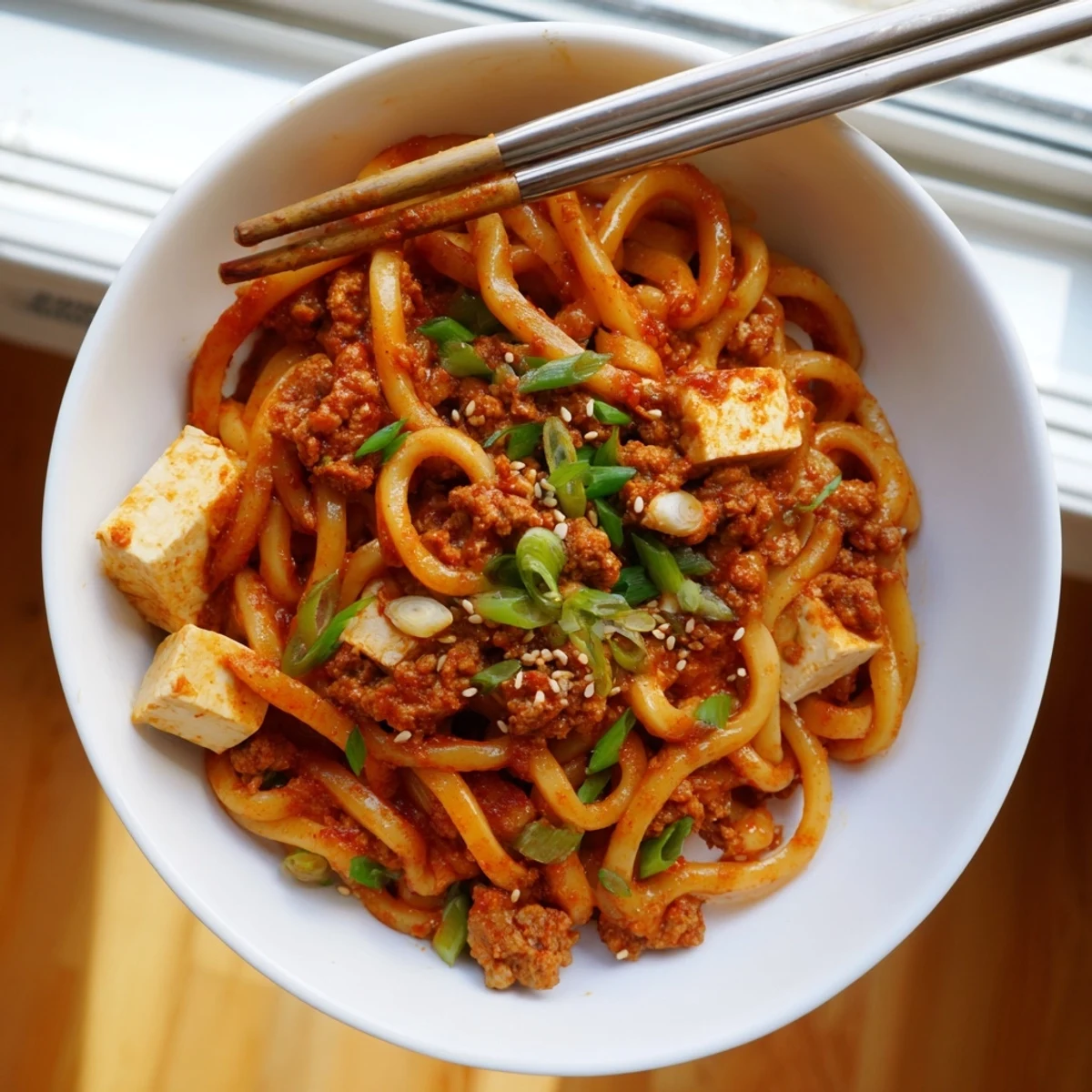
Save This fusion dish became my go-to for dinner parties because it looks impressive and feeds a crowd with minimal fuss. Everyone always asks for the recipe, and I love watching their faces light up at that first numbing, spicy bite.
Recipe FAQs
- → Can I make Mapo Tofu Udon vegetarian?
-
Yes, simply substitute the ground pork with plant-based mince and replace oyster sauce with mushroom sauce. Use vegetable broth instead of chicken broth for a fully vegetarian version.
- → How spicy is Mapo Tofu Udon?
-
The dish has medium heat from the doubanjiang chili paste and optional Sichuan peppercorns. You can adjust the spice level by adding more or less chili paste, or omit the peppercorns for a milder version.
- → What type of tofu works best?
-
Soft tofu is traditional for mapo tofu as it absorbs the spicy sauce beautifully and has a silky texture. Avoid firm tofu which won't soak up flavors as well.
- → Can I use different noodles?
-
While udon noodles provide the perfect chewy texture, you can substitute with thick wheat noodles, ramen, or even rice noodles for gluten-free options.
- → How do I store leftovers?
-
Store the mapo tofu sauce and noodles separately in airtight containers. The sauce keeps for 3-4 days in the refrigerator. Reheat gently and toss with freshly cooked noodles for best results.